
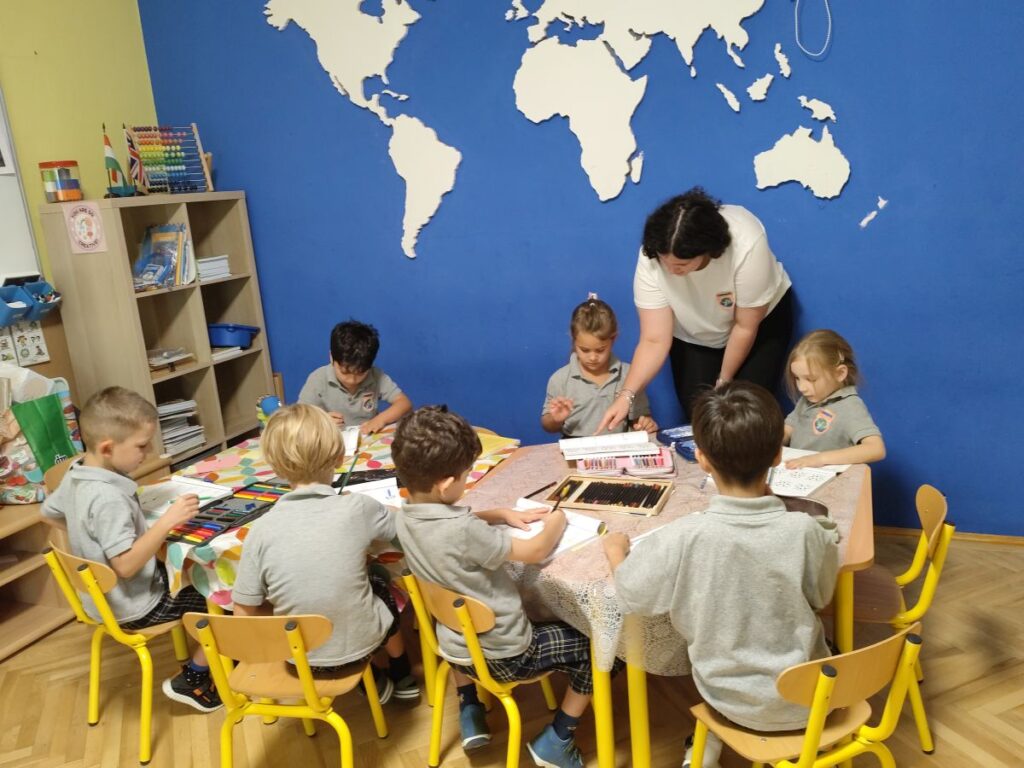
Growing, Moving, Learning and Getting Ready for School

At Cambridge Sportóvoda, we believe that preparing children for the future means supporting the development of the whole child. Learning at kindergarten age happens naturally through movement, play, exploration, communication and carefully chosen developmental activities.

Our programme therefore brings together English language learning, TSMT, regular sports activities and playful school-preparation tasks, creating a stimulating environment where children can develop at their own pace while enjoying the learning process.
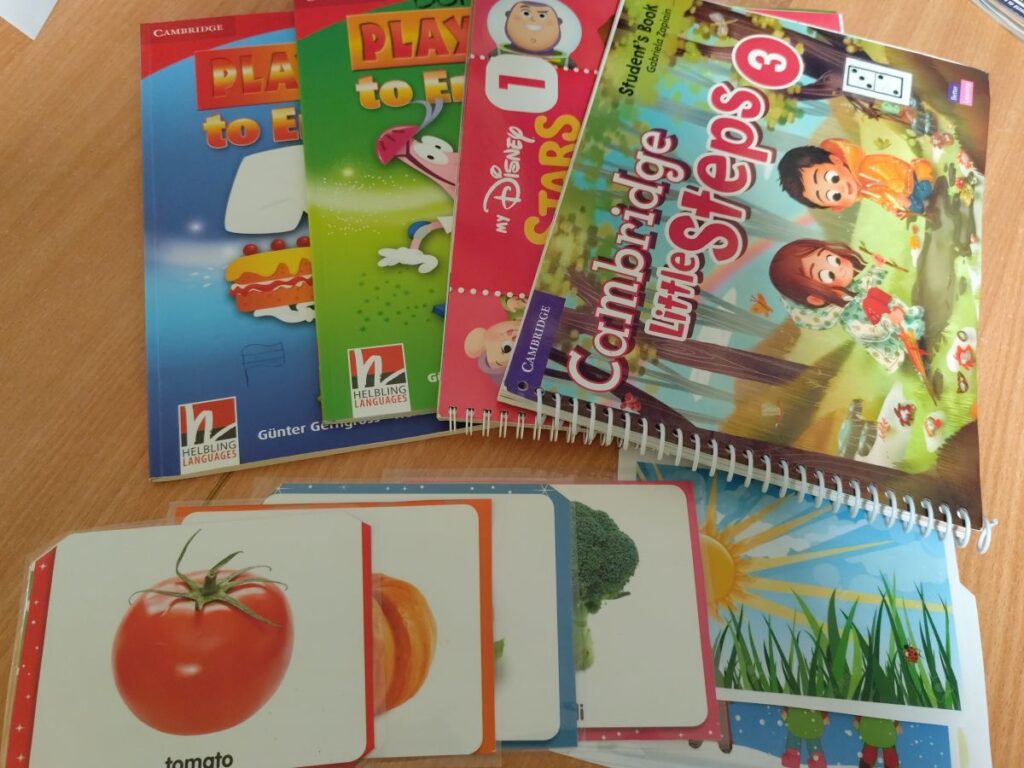
Learning English Through Play

English is a natural part of everyday life at Cambridge Sportóvoda. Our English programme is based on Cambridge and international approaches to early language learning, with activities adapted to young children's age and developmental level. At this age, we believe that children learn a new language most successfully when they can experience it rather than study it.

Through regular exposure to English in meaningful and enjoyable situations, children gradually develop their listening comprehension, vocabulary, pronunciation and confidence in communicating.

Games are especially important in our English lessons. They encourage children to participate without being afraid of making mistakes and allow new words and expressions to be repeated naturally.

Our aim is to create a positive first relationship with the English language so that children associate English with communication, discovery and enjoyment.

TSMT – Development Through Movement

Movement plays an essential role in early childhood development. At Cambridge Sportóvoda, children have access to activities led by a qualified TSMT therapist. TSMT, or Tervezett Szenzo-Motoros Tréning (Planned Sensorimotor Training), is a structured movement-based developmental method. Through carefully planned movement activities, children practise abilities connected with coordination, balance, body awareness, spatial orientation, attention, and following instructions. These experiences support children's overall development while strengthening many of the underlying skills that are important in everyday kindergarten life and later in school. Tervezett Szenzomotoros TréningThese experiences support children's overall development while strengthening many of the underlying skills that are important in everyday kindergarten life and later in school.

Sport as Part of Everyday Development

Physical activity is an important part of life at Cambridge Sportóvoda. Our programme includes activities such as swimming, tennis and rhythmic gymnastics, giving children the opportunity to experience different forms of movement during their kindergarten years. Sport supports much more than physical development. Through regular movement, children can strengthen:
Most importantly, we would like children to experience movement as something positive, enjoyable and naturally connected to everyday life.

Preparing the Whole Child for School

For our preschool-aged children, preparation for school also includes carefully selected developmental activities and workbooks.

We use materials such as Színezd ki… és rajzolj te is and Színezd ki… és számolj te is, allowing children to practise important skills through colourful, structured, and age-appropriate exercises (Színezd ki… és rajzolj te is). Drawing, colouring and pre-writing activities help children develop skills that will later support writing and reading. The exercises provide opportunities to practise:

The aim is not simply to complete worksheets, but to gradually strengthen the abilities children will need when they begin more formal learning at school (Színezd ki… és számolj te is). Early mathematical thinking begins long before children enter a classroom. Through playful activities involving numbers, quantities, patterns and relationships, children learn to observe, compare, recognise connections and find solutions. These tasks introduce the foundations of mathematical thinking while encouraging concentration and independent work.

Preparing the Whole Child for School

School readiness is not defined by a single skill. It involves different areas of a child’s development, including physical well-being, communication, attention, curiosity, social and emotional competence, independence and motivation to learn. International early-childhood guidance also emphasises this whole-child approach. UNICEF identifies physical, social-emotional, cognitive and communication development, together with curiosity and motivation to learn, as important components of school readiness.
This is why our approach combines English, movement, TSMT, sport, creativity and playful cognitive development, supporting children across several areas as they prepare for the transition to school.
Learn more about school readiness and early childhood development: UNICEF – Build to Last: A Framework in Support of Universal Quality Pre-primary Education
(Zeynab Nazirova)
Cambridgesport

Privacy Overview

This website uses cookies so that we can provide you with the best user experience possible. Cookie information is stored in your browser and performs functions such as recognising you when you return to our website and helping our team to understand which sections of the website you find most interesting and useful.